
Shark Tank season 1 episode 14 (often referred to as S01E14) originally aired on February 5, 2010, and features a group of entrepreneurs pitching a wide range of creative consumer products to the Sharks. The episode includes a geometric educational construction toy designed to help children explore engineering and architecture concepts, an organic plant fertilizer made from llama manure, a novelty service that mails inflatable balls with personalized messages, a hands-free wearable umbrella designed for commuters and outdoor workers, and a party-style slipper sales business inspired by the home demonstration model.
If you’re looking for a complete recap of Shark Tank Season 1 Episode 14, including the entrepreneurs, deals made in the Tank, and a breakdown of each product featured in the episode, you’ll find everything you need below in this detailed guide.
Looking for more from this season? Browse the complete Shark Tank Season 1 episode guide for a full breakdown of every pitch and investment. For a ranked look at the biggest deals and most successful companies, explore the Best of Shark Tank Season 1 – Top Deals, Biggest Investments & Most Successful Companies.
About Shark Tank Season 1
Executive producer Mark Burnett and Sony Pictures Television return with another exciting season of Shark Tank, the hit business reality show where entrepreneurs pitch their ideas to a panel of wealthy investors known as the “Sharks.” Contestants must convince the Sharks that their businesses are worth investing in, often leading to intense negotiations and high-stakes deals.
The show is based on the international format Dragons’ Den, which originally launched in Japan and later became a global franchise. Over the years, Shark Tank has helped launch hundreds of companies while giving viewers a behind-the-scenes look at how real investment decisions are made.
Browse All Shark Tank Season 1 Episodes
Each recap includes the entrepreneurs, deals made in the Tank, and 2026 business updates.
Shark Tank Season 1 Episode Guide
Explore every pitch, deal, and business update from the first season of Shark Tank.
Disclosure: As an Amazon Associate, we earn from qualifying purchases. This helps support the site at no additional cost to you.
Sharks in Shark Tank Season 1
The main Sharks appearing during Shark Tank Season 1 Episode 14 included:
Season 1 Episode 14 in depth
In this first season as sharks in every episode appear Kevin Harrington, Daymond John, Kevin O’Leary, Barbara Corcoran, and Robert Herjavec
In this season 1 episode 14, there is no guest judge.
Kevin Harrington
Kevin Harrington is an American business executive and entrepreneur born in 1956. He has appeared as Keynote Speaker on the American annual invention trade show Inpex 2012 and on the television series Shark Tank.
Harrington became a Chairman and Senior Executive Officer of H & H Imports Inc. and a Member of the Advisory Board at AbsolutelyNew, Inc.
Source: Wikipedia
From 2006 to 2008, Harrington was the Director of Infusion Brands International, Inc. In 2007, he became the Executive Director of ResponzeTV Plc and the Chief Executive Officer of ResponzeTV Plc, then a year later, in 2008, he left both positions.
On ABC TV series Shark Tank, Harrington was one of the first investors and members of the Sharks from its beginning in 2009. After two seasons of the show, he left in 2011.
[inhype_block type=”postsgrid4″ block_title=”You may also like” block_subtitle=”Shark Tank Season 8″ block_posts_type=”latest” block_categories=”” block_posts_limit=”3″ block_posts_loadmore=”no” block_posts_offset=”0″]
There is a saying in business that the first person to say the number loses.
Daymond John
Every business and entrepreneur we listed below has appeared on Shark Tank Season 1 Episode 14. Unfortunately, there are many scammers who claim they have been on the show or they have received investments from the Sharks. If you don’t see a business on this list, they haven’t been actually on Shark Tank. Great sources you can always check are on ABC’s episode guide and also Wikipedia.
What Happened in Shark Tank Season 1 Episode 14?
Shark Tank Season 1 Episode 14 featured five entrepreneurs pitching a mix of consumer products and novelty services to the Sharks.
The businesses ranged from a STEM-focused educational construction toy and an organic fertilizer made from llama manure to a hands-free wearable umbrella, a home-party slipper sales business, and a novelty greeting service that mails inflatable balls with messages.
Unlike some later episodes where most companies secure investments, this episode resulted in only two deals, as the Sharks carefully evaluated valuation, scalability, and market potential before committing capital.
Businesses Featured on Shark Tank S01E14
Here is the complete list of companies that appeared on Shark Tank Season 1 Episode 14:
List with all the appearances in Season 1 Episode 14:
- Qubits – A geometric construction toy designed to help children learn engineering, architecture, and spatial design through modular building pieces.
- Llama Brew – An organic liquid fertilizer created from processed llama manure as a natural alternative to chemical plant food.
- Nubrella – A wearable hands-free umbrella system designed to protect users from rain while keeping both hands free.
- Pillars of Slippers – A home-based slipper company that sells products through party-style demonstrations similar to the Tupperware model.
- SENDaBALL – A novelty greeting service that sends an inflated ball with a printed message directly through the mail to surprise recipients.
Shark Tank S01E14 Highlights
• Educational toy Qubits secures an investment from Daymond John
• A unique hands-free umbrella invention lands a deal with two Sharks
• Organic fertilizer made from llama manure sparks debate among the investors
• Novelty greeting service SENDaBALL generates laughs but fails to secure funding
• Only two of the five businesses successfully close deals
Shark Tank S01E14 Episode Products Summary Table
The table below summarizes the key details from Shark Tank Season 1 Episode 14, including each company’s funding request, the final deal negotiated in the Tank, which Shark invested, and the current business status as of 2026.
| Company | Industry | Ask | Deal | Shark(s) | 2026 Status |
|---|---|---|---|---|---|
| Qubits | Educational Toy / STEM | $90K for 51% | $90K for 51% | Daymond John | Educational toy brand |
| Llama Brew | Organic Fertilizer | $125K for 10% | No Deal | — | Limited visibility |
| Nubrella | Rain Gear / Wearable Umbrella | $200K for 25% | $200K for 51% | Kevin Harrington & Daymond John | Product still sold online |
| Pillars of Slippers | Footwear | $150K for 15% | No Deal | — | Small niche brand |
| SENDaBALL | Novelty Gift Service | $86K for 20% | No Deal | — | Active ecommerce brand |
Two entrepreneurs appearing on Shark Tank Season 1 Episode 14 successfully secured deals after negotiations over equity and control of their companies.
Unlike many modern episodes that feature four pitches, this early Shark Tank episode included five companies, a format occasionally used during the first season of the show.
Shark Tank Season 1 Episode 14 Snapshot
Season: 1
Episode: 14
Air Date: February 5, 2010
Sharks: Kevin Harrington, Kevin O’Leary, Barbara Corcoran, Robert Herjavec, Daymond John
Total Pitches: 5
Deals Made: 2
No-Deal Count: 3
Largest Equity Deal: 51% (Qubits & Nubrella)
Largest Investment: $200K (Nubrella)
Shark Tank S1E14 Investment Totals & Financial Breakdown
Shark Tank Season 1 Episode 14 featured approximately $651,000 in capital requests, with $290,000 invested by the Sharks on air.
Financial Aggregation
Total Capital Requested: $651K
Total Capital Invested: $290K
Total Capital Committed: $290K
Highest Equity Given: 51% (Qubits & Nubrella)
Highest Valuation Asked: $1.25M valuation (Llama Brew – $125K for 10%)
Lowest Valuation Asked: ~$176K valuation (Qubits – $90K for 51%)
Average Equity Asked: ~24%
Average Equity Given (Deals Closed): 51%
Valuation Compression Analysis
Shark Tank Season 1 Episode 14 demonstrated the tough negotiating style of the early Shark Tank seasons, where investors frequently demanded controlling stakes in companies.
• Qubits accepted a majority ownership deal with Daymond John to secure funding.
• Nubrella increased equity significantly, giving up 51% ownership to Kevin Harrington and Daymond John.
• Llama Brew, Pillars of Slippers, and SENDaBALL all left the Tank without investment due to valuation concerns and questions about scalability.
These negotiations illustrate how early Shark Tank deals often required founders to give up large ownership stakes in exchange for capital and distribution support.
Key Observations
- Educational STEM toys attract Shark interest – Qubits demonstrated strong potential in the growing educational toy market.
- Innovative wearable products generate investor curiosity – Nubrella offered a unique solution for hands-free rain protection.
- Eco-friendly gardening products appeal to niche markets – Llama Brew presented a sustainable fertilizer alternative.
- Novelty products can struggle to secure funding – SENDaBALL entertained the Sharks but raised questions about long-term scalability.
Shark Tank Air Date: 02/05/10 – Season 1 – Episode 14
Qubits – Educational Toy
| ASKED FOR | GOT | SHARK |
| $90,000 for 51% | $90,000 for 51% | Daymond John |
Entrepreneurs: Mark Burginger
Product Overview
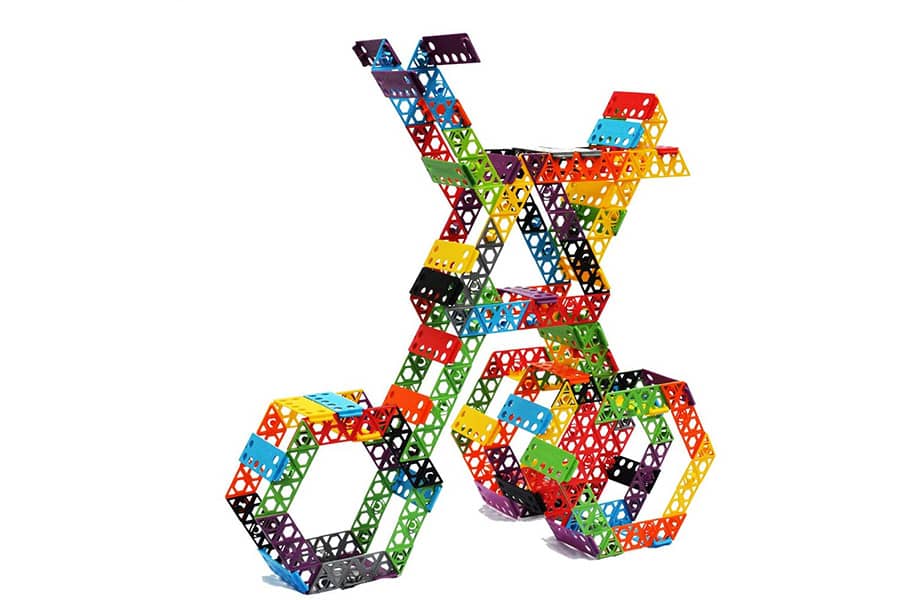
Qubits is a new construction toy for kids. Recommended for ages 4 to 16, even adults could have fun with these new shapes. Qubits helps to understand and encourage exploration in architecture, design, engineering, and geometry.
What makes Qubits unique compared to other brands like LEGO, Tinker Toys, or Lincoln Logs is that you can use your imagination to create whatever you want. Qubits are dishwasher-safe, which makes them appealing to most parents! Another important point about Qubits is that they are 100% made in the USA.
Using this alternative construction toy, Qubits, you’ll make it an easier and more fun way for your child to understand geometric shapes and modular design. Qubits are currently used in schools and classrooms across the country and have gained a reputation as a great STEM tool.
Qubits – 2026 Update
As of 2026, Qubits remains recognized as a STEM-focused construction toy designed to help children explore geometry, engineering, and architecture through hands-on play. The product gained national exposure after founder Mark Burginger appeared on Shark Tank and secured an investment from Daymond John.
Following the show, Qubits expanded its reach into educational markets, with the construction sets being used in classrooms and STEM learning programs. The brand has maintained a niche presence among educational toys, focusing on modular building pieces that encourage creativity and problem-solving.
Where to Buy Qubits
Llama Brew – Plant Food Made From Llama Manure
| ASKED FOR | GOT | SHARK |
| $125,000 for 10% | NO DEAL | NO SHARK |
Entrepreneurs: Aida Lough and Phil Lough
Product Overview
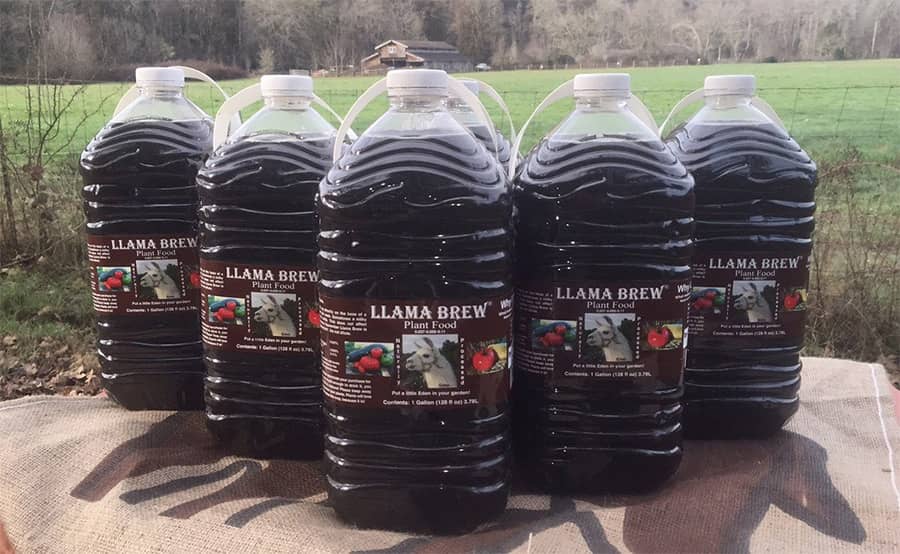
Llama Brew is an organic liquid fertilizer made from processed llama manure, often referred to by the founders as “llama doo.” The product was created by entrepreneurs Aida Lough and Phil Lough, who developed a process to convert the manure into a nutrient-rich plant fertilizer.
Unlike many conventional fertilizers that rely on synthetic chemicals, Llama Brew was designed as a natural, environmentally friendly alternative for gardeners and plant enthusiasts. The founders also held a provisional patent related to their method of transforming llama manure into a liquid fertilizer.
During their appearance on Shark Tank, the entrepreneurs sought investment to expand production and distribution. However, the Sharks ultimately declined to invest, largely due to concerns about the business’s high valuation and limited scalability.
Llama Brew – 2026 Update
As of 2026, Llama Brew remains known as an unusual organic fertilizer made from processed llama manure. Founders Aida Lough and Phil Lough introduced the product on Shark Tank as a natural alternative to chemical fertilizers.
Although the company did not secure a deal from the Sharks, the product attracted attention among gardeners interested in eco-friendly plant nutrients. Llama Brew continued to be marketed as a natural fertilizer for home gardeners.
Where to Buy Llama Brew
Nubrella
| ASKED FOR | GOT | SHARK |
| $200,000 for 25% | $200,000 for 51% | Kevin Harrington and Daymond John |
Entrepreneurs: Alan Kaufman
Product Overview
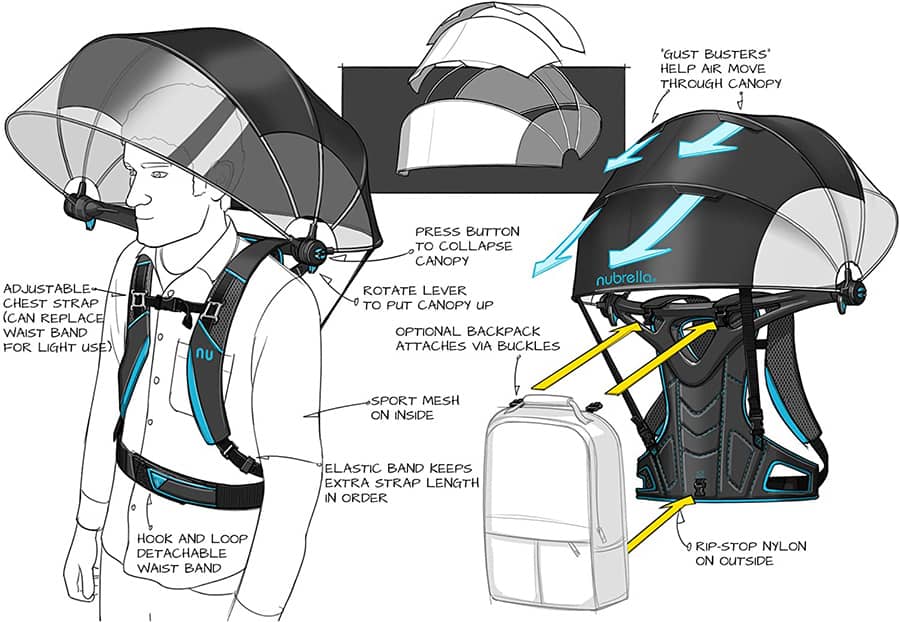
Nubrella is an innovative hands-free umbrella designed to provide full upper-body protection from rain and wind. Instead of holding a traditional umbrella, the device is worn on the shoulders, allowing users to stay dry while keeping both hands free.
The product was created by inventor Alan Kaufman, who introduced it as a more practical alternative to both umbrellas and raincoats. The wearable design offers wind-resistant coverage and can be useful in a wide range of commercial and recreational situations, including outdoor events, commuting, photography, and sports.
Nubrella also features a custom-designed backpack attachment, allowing users to carry belongings while wearing the umbrella system. The company secured multiple patents in the United States and internationally to protect the technology behind the design.
Kaufman, an experienced entrepreneur with more than two decades of experience in the wiTank seeking investment to help bring the product to a larger market.
Nubrella – 2026 Update
As of 2026, Nubrella remains one of the more unusual inventions to appear on Shark Tank. Created by inventor Alan Kaufman, the product is a wearable, hands-free umbrella designed to provide wind-resistant rain protection.
After appearing on Shark Tank, Kaufman secured an investment from Kevin Harrington and Daymond John. The company continued to promote the product as a solution for commuters, outdoor workers, and sports spectators who need rain protection without holding a traditional umbrella.
Where to Buy Nubrella
Pillars of Slippers
| ASKED FOR | GOT | SHARK |
| $150,000 for 15% | NO DEAL | NO SHARK |
Entrepreneurs: Nicole Jones
Product Overview
Pillars of Slippers is a home-based footwear business founded by Nicole Jones. The company sells comfortable slippers through a party-style sales model, similar to the approach used by Tupperware, where hosts organize parties and sell products directly to guests.
The business was designed to grow through a network of independent sellers who could host slipper parties and earn commissions from each sale. Nicole hoped to expand the concept nationwide by creating a franchise-style system that would allow others to operate their own Pillars of Slippers events.
She entered the Shark Tank seeking $150,000 in exchange for 15% equity, aiming to secure a Shark partner who could help scale the business and build a larger distribution network.
Pillars of Slippers – 2026 Update
As of 2026, Pillars of Slippers, founded by Nicole Jones, is remembered for its home-party sales model similar to direct-sales companies like Tupperware.
The business appeared on Shark Tank seeking investment to expand its slipper sales network through hosted parties and franchise-style operations. Although the Sharks declined to invest, the concept highlighted the potential of direct-selling models within niche product categories.
Where to Buy Pillars of Slippers
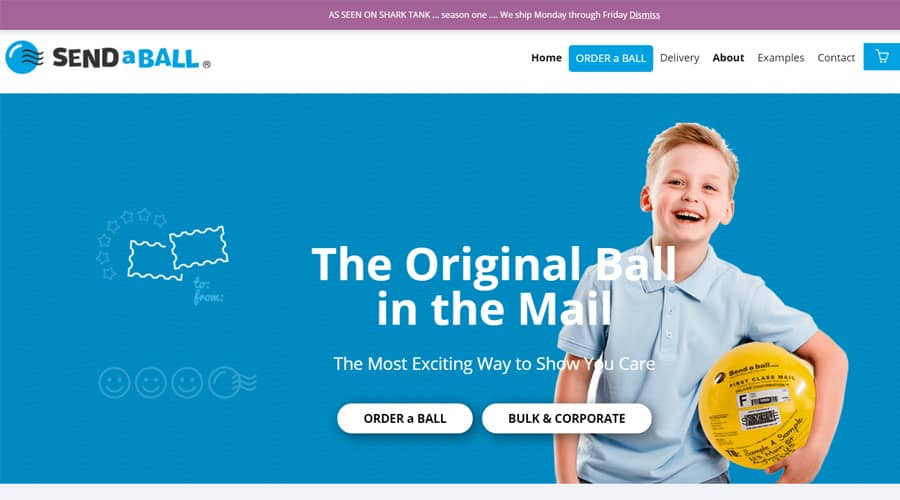
SENDaBALL
| ASKED FOR | GOT | SHARK |
| $86,000 for 20% | NO DEAL | NO SHARK |
Entrepreneurs: Michele Kapustka and Melisa Moroko
Product Overview
SENDaBALL is a novelty greeting service that sends an inflatable bouncy ball through the mail on behalf of customers. Instead of a traditional greeting card, the recipient receives a colorful ball with a printed message delivered directly to their mailbox.
The company was founded by sisters Michele Kapustka and Melissa Moroko, who lived across the street from each other and wanted to create a flexible business that allowed them to spend more time with their families.
Their idea was simple but memorable: send a fun greeting in the form of a toy ball that travels through the postal system already inflated, surprising recipients when it arrives.
The sisters entered the Shark Tank seeking an investment that would help them scale production and expand their novelty gift service to a wider audience.
SENDaBALL – 2026 Update
As of 2026, SENDaBALL continues to operate as a novelty gift company that sends inflatable balls with personalized messages through the mail. The business was founded by sisters Michele Kapustka and Melissa Moroko, who pitched the concept on Shark Tank.
Although the entrepreneurs did not secure a deal in the Tank, the company continued growing after the show by expanding its selection of themed balls and customizable messages. SENDaBALL remains a popular alternative to traditional greeting cards, offering customers a fun and surprising way to celebrate birthdays, holidays, and special occasions.
Where to Buy SENDaBALL
[inhype_block type=”showcase4″ block_title=”More from Shark Tank” block_subtitle=”Recommended” block_posts_type=”random” block_categories=”” block_posts_limit=”4″ block_posts_loadmore=”no” block_posts_offset=”0″]
Watch full episodes of shark tank online with Amazon Video
If you’re looking to watch Shark Tank Season 1 Episode 14 online, episodes are typically available via Amazon Video or ABC’s streaming platforms.
Industry Breakdown – Shark Tank S01E14
Educational Toys / STEM Products: 1
Organic Gardening Products: 1
Rain Gear / Outdoor Products: 1
Footwear / Direct Sales: 1
Novelty Gifts / Greeting Services: 1
Compared to many later Shark Tank episodes, Season 1 Episode 14 featured a diverse mix of early-stage consumer products.
The episode leaned toward:
• Simple consumer product innovations
• Niche products solving specific everyday problems
• Creative novelty concepts
• Founder-driven businesses seeking early funding
• Direct-to-consumer product ideas
Did the Deals Close After Filming?
As with all Shark Tank deals, agreements made on television are subject to due diligence after filming.
As of 2026:
• Qubits continued operating as an educational construction toy brand used in STEM learning environments.
• Nubrella remained known for its wearable hands-free umbrella concept, though the product remained a niche consumer item.
There is no widely reported public information suggesting that the on-air deals for Qubits or Nubrella fell through after filming.
The other companies appearing in the episode — Llama Brew, Pillars of Slippers, and SENDaBALL — did not secure investments during their pitches.
Best Deal of Shark Tank Season 1 Episode 14 (S01E14)
Qubits stands out as the strongest deal from this episode due to:
• A product aligned with STEM education trends
• Clear educational value for children and classrooms
• Strong problem-solving focus on geometry and design learning
• Potential for school and educational market adoption
The construction toy offered a unique alternative to traditional building toys by focusing on geometric shapes and architectural design concepts.
However, Nubrella also attracted significant attention due to its unusual hands-free rain protection design and potential commercial applications.
🦈 Shark Strategy Patterns in This S01E14 Episode
Daymond John showed interest in consumer products with clear retail potential, investing in both Qubits and Nubrella.
Kevin Harrington partnered on the Nubrella deal, recognizing the product’s potential in outdoor and commercial markets.
Kevin O’Leary remained highly focused on valuation and scalability during negotiations.
Barbara Corcoran and Robert Herjavec evaluated the pitches but ultimately chose not to invest in this episode.
This episode demonstrated the Sharks’ early approach to investing, often requiring larger equity stakes in exchange for capital.
Why Shark Tank Season 1 Episode 14 Stands Out
This episode is notable because it featured:
• A unique educational construction toy that secured funding
• An unusual wearable umbrella invention
• An organic fertilizer made from llama manure
• A novelty greeting business sending balls through the mail
• A direct-sales slipper company modeled after home party businesses
Season 1 episodes often featured experimental product concepts, reflecting the early stage of the show and the wide variety of entrepreneurs applying to pitch their ideas.
Final Thoughts on Shark Tank Season 1 Episode 14 (S01E14)
Shark Tank Season 1 Episode 14 highlights how entrepreneurs with creative ideas attempt to turn simple concepts into scalable businesses.
While only two companies secured investments, the episode demonstrated the importance of valuation, scalability, and market demand when pitching to the Sharks.
The episode also reflects the early years of Shark Tank, when many deals required founders to give up significant ownership stakes in exchange for investment and business guidance.
Explore More Shark Tank Guides
• Shark Tank Season 1 Episode 13 Recap
• Shark Tank Season 1 Episode 12 Recap
• Shark Tank Season 1 – Full Episode Guide
• Best Deals of Shark Tank Season 1
Companies From Shark Tank Season 1 Episode 14 – Where Are They Now?
Entrepreneurs appearing on Shark Tank Season 1 Episode 14 introduced a mix of creative consumer products, from educational toys to novelty greeting services. While only two companies secured investments in the Tank, several of the businesses continued operating after their television appearance.
Below is a quick 2026 update on the companies featured in this episode and what happened to them after Shark Tank.
Qubits – Where Are They Now?
The geometric construction toy Qubits, created by Mark Burginger, secured a deal with Daymond John during the episode. After appearing on Shark Tank, the product gained exposure among educators and STEM programs.
As of 2026, Qubits continues to be recognized as a niche educational toy used in classrooms and learning environments that focus on geometry, engineering, and architectural concepts.
Llama Brew – Where Are They Now?
Organic fertilizer company Llama Brew, founded by Aida Lough and Phil Lough, did not secure a deal on Shark Tank.
The product attracted attention because it was made from processed llama manure and marketed as a natural alternative to chemical fertilizers. The company continued selling its plant food product to niche gardening audiences after the show.
Nubrella – Where Are They Now?
Inventor Alan Kaufman pitched the hands-free umbrella system Nubrella and secured a deal with Kevin Harrington and Daymond John.
The wearable rain protection device generated media attention after the episode aired. As of 2026, Nubrella remains one of the more unusual inventions to appear on Shark Tank and is still occasionally available through online retailers.
Pillars of Slippers – Where Are They Now?
Pillars of Slippers, founded by Nicole Jones, featured a direct-sales model similar to home party businesses like Tupperware.
Although the Sharks declined to invest, the concept demonstrated how entrepreneurs attempted to build footwear brands through hosted product parties and independent sellers.
SENDaBALL – Where Are They Now?
Novelty greeting company SENDaBALL, created by sisters Michele Kapustka and Melissa Moroko, continues operating as of 2026.
The company allows customers to send colorful inflatable balls with personalized messages directly through the mail. Despite leaving the Tank without a deal, SENDaBALL expanded its online store and remains a fun alternative to traditional greeting cards.
Frequently Asked Questions About Shark Tank Season 1 Episode 14
When did Shark Tank Season 1 Episode 14 (S01E14) air?
**Shark Tank Season 1 Episode 14 originally aired on February 5, 2010, on ABC.
What companies appeared on Shark Tank Season 1 Episode 14?
The companies featured in the episode were Qubits, Llama Brew, Nubrella, Pillars of Slippers, and SENDaBALL.
Who got a deal in Shark Tank Season 1 Episode 14?
Two companies secured deals with the Sharks: Qubits and Nubrella.
How much total money was invested in Shark Tank S01E14?
Approximately $290,000 was invested by the Sharks during this episode.
Which company received the largest investment?
Nubrella received the largest investment with $200,000 for 51% equity from Kevin Harrington and Daymond John.
Did all deals close after filming?
As with all Shark Tank deals, agreements made on the show are subject to due diligence after filming. There is no widely reported public information indicating that the deals for Qubits or Nubrella fell through.
What industries were represented in Shark Tank Season 1 Episode 14?
The episode featured businesses in educational toys, organic gardening products, rain gear innovations, footwear direct sales, and novelty gift services.
Is Qubits still in business in 2026?
Qubits remains a niche educational construction toy occasionally used in STEM learning environments used in educational settings and classrooms, although it remains a niche educational product.
Is SENDaBALL still operating in 2026?
Yes. SENDaBALL continues operating as a novelty gift ecommerce business that sends inflatable balls with personalized messages through the mail.
Is Nubrella still available in 2026?
Nubrella remains known as a wearable hands-free umbrella invention, though it is primarily a niche product with limited online availability.
