
Shark Tank season 13 episode 1 (S13E01) aired on October 8, 2021, launching the thirteenth season of ABC’s long-running investment series. The premiere featured four consumer-facing brands spanning food, apparel, accessories, and sustainable fashion — each presenting very different scalability profiles and valuation strategies.
This premiere episode featured one of the lowest deal conversion rates of Season 13, with only one out of four entrepreneurs securing investment.
Season 13 Episode 1 reinforced a core Shark Tank principle: brand passion alone is not enough — scalable profitability wins.
If you’re looking for a full recap of Shark Tank Season 13 Episode 1, including the deals made, entrepreneurs involved, and product breakdowns, you’ll find everything below.
Looking for more from this season? Browse the complete Shark Tank Season 13 episode guide here. For a ranked breakdown of the strongest investments this season, explore the Best of Shark Tank Season 13 – Top Deals, Biggest Investments & Most Successful Companies.
About Shark Tank Season 13
Executive producer Mark Burnett and Sony Pictures TV are bringing another season of the business-themed reality show Shark Tank, where major investors, aka “sharks,” pitch business ideas from contestants. The show is based on the Japanese reality show “Dragon’s Den.”
Browse all episodes from Shark Tank Season 13 below.
Each recap includes the entrepreneurs, deals made, and 2026 business updates.
Shark Tank Season 13 Episodes
Disclosure: As an Amazon Associate, we earn from qualifying purchases. This helps support the site at no additional cost to you.
Shark Tank Season 13 Guest Sharks
Season 13 included several guest sharks alongside the main panel.
Notable guest sharks this season included:
- Emma Grede, CEO and co-founder of Good American and founding partner of Skims
- Kevin Hart (actor and comedian)
- Peter Jones (dragon on Dragons’ Den)
- Daniel Lubetzky, (founder and executive chairman of KIND Snacks )
- Nirav Tolia (co-founder of Nextdoor)
You may also like
Shark Tank Season 8
Success is about making your life a special version of unique that fits who you are, not what other people want you to be.
Mark Cuban
We listed below every entrepreneur and business who has appeared on Shark Tank Season 13 Episode 1. Many scammers claim they’ve received big investments from the Sharks or they have been on the show. They were not actually on Shark Tank if you don’t see a business on this list. Some of the top places you can use to check are on Wikipedia and also ABC’s episode guide.
What Happened in Shark Tank Season 13 Episode 1?
The premiere episode quickly established a disciplined investment tone.
Unlike entertainment-heavy episodes, this one focused heavily on:
- Unit economics
- Customer acquisition costs
- Margin sustainability
- Valuation realism
Here’s how the night unfolded:
Businesses Featured on Shark Tank Season 13 Episode 1 (S13E1)
Here is the complete list of companies that appeared on Shark Tank Season 13 Episode 1:
- Uprising Bread – sparked intense margin scrutiny due to high customer acquisition costs and frozen shipping logistics.
- KIN Apparel – impressed the Sharks with a built-in YouTube audience and strong brand authenticity.
- Lion Latch – demonstrated a simple, clever product but raised questions about long-term defensibility.
- Paskho Apparel – entered with a bold $20 million valuation — triggering immediate pushback.
Season 13 Episode 1 Highlights
- 4 pitches
- 1 confirmed on-air deal
- $1.35 million in total capital requested
- Strong valuation pushback from the panel
Shark Tank Season 13 Episode 1 Products Summary Table
The table below provides a quick overview of the companies that appeared in Shark Tank Season 13 Episode 1. It highlights each business’s industry, original funding request, whether a deal was secured in the Tank, the Sharks involved, and the company’s current operating status as of 2026.
This premiere episode introduced a diverse group of entrepreneurs, featuring businesses in food service, apparel, consumer accessories, and sustainable fashion. Founders entered the Tank with ambitious valuations and unique business models, prompting detailed negotiations around margins, market size, and scalability.
| Company | Industry | Original Ask | Deal Made? | Shark(s) | Status (2026) |
|---|---|---|---|---|---|
| Uprising Food | Keto / Gluten-Free Bread | $500K for 3% | ❌ No | — | DTC growth |
| KIN Apparel | Satin-Lined Apparel | $200K for 10% | ✅ Yes | Lori Greiner | National expansion |
| Lion Latch | Jewelry Storage | $150K for 15% | ❌ No | — | Amazon niche leader |
| Paskho Apparel | Sustainable Fashion | $500K for 2.5% | ❌ No | — | DTC only |
Out of the four businesses featured in Shark Tank Season 13 Episode 1, only one secured an investment from the Sharks.
KIN Apparel impressed the panel with its strong brand story and built-in audience, ultimately securing a deal with Lori Greiner. The company’s focus on protective hoodies designed for natural hair care resonated with the Sharks due to its clear target market and strong social media traction.
The remaining businesses — Uprising Bread, Lion Latch, and Paskho Apparel — did not secure deals on air. While each concept generated interest and discussion among the Sharks, concerns around valuation, customer acquisition costs, or long-term defensibility prevented an agreement from being finalized.
Overall, Episode 1 set the tone for Season 13 by highlighting ambitious entrepreneurs and emphasizing the importance of strong margins, realistic valuations, and scalable business models when pitching to the Sharks.
Shark Tank S13E1 Snapshot
- Season: 13
- Episode: 1
- Air Date: October 8, 2021
- Sharks: Mark Cuban, Lori Greiner, Kevin O’Leary, Barbara Corcoran, Robert Herjavec
- Total Pitches: 4
- Deals Made: 1
Episode Investment Totals & Financial Breakdown
Shark Tank Season 13 Episode 1 featured $1.35 million in capital requests but only $200,000 was invested.
Financial Aggregation:
- Total Requested: $1,350,000
- Total Invested: $200,000
- Largest Deal: $200,000 (KIN Apparel)
- No-Deal Count: 3
- Average Valuation Asked: ~$9.8 million
- Highest Valuation: $20 million (Paskho Apparel)
- Average Equity Asked: 7.6%
Key Observations:
- Food margins under scrutiny — Uprising Food’s ~$50 customer acquisition cost versus ~$3 net margin per order raised red flags.
- Valuation compression — Paskho’s $20M ask did not align with revenue multiples.
- Brand leverage rewarded — KIN Apparel’s built-in audience significantly reduced investor risk.
Shark Tank Air Date: 10/08/21 – Season 13 – Episode 1
Uprising Bread
| ASKED FOR | VALUATION | SALES AT TIME OF SHOW | GOT | SHARK | |
| $500,000 For 3% | ~$16.7 million | $3M cumulative | NO DEAL | NO SHARK |
Entrepreneurs: Kristen And William Schumacher
Product Overview
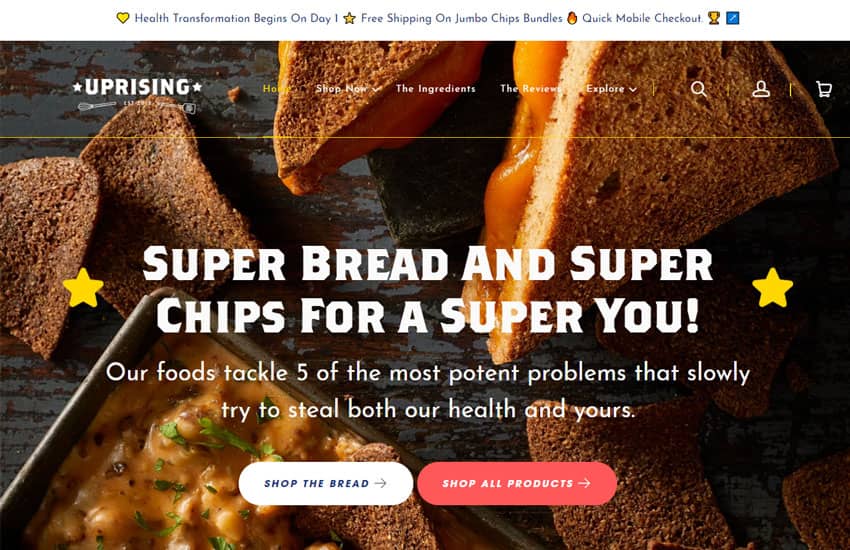
Kristen and William Schumacher started Uprising in 2021 and appeared on Shark Tank during Season 13, Episode 1, presenting their product: paleo- and keto-friendly bread and chips. Founded in March 2019, Uprising Food’s products are dairy and gluten-free. Their bread is also low in carbs, boosts gut health, and is an excellent source of fiber, made with superfood ingredients.
Uprising Food operates in the keto and gluten-free bread category. At approximately $12 per loaf, it targeted premium health-conscious consumers. The brand emphasizes:
- Low-carb formula
- High-fiber ingredients
- Superfoods (almonds, flaxseed, psyllium husk)
- Direct-to-consumer subscription model
With no experience in baking, Kristen Schumacher, who has worked in marketing and communications, and her husband, William Schumacher, a former P&G manager, created this packed-with-superfoods and shelf-life-extending bread, especially if kept in a freezer. All-natural ingredients such as egg whites, almonds, flax seeds, salt, psyllium husk, baking powder, apple cider vinegar, and water. At around $12, this bread could be quite expensive for most people.
A bread cube and chips are the current products sold by Uprising Food on its website, through a subscription model. Although they sold just under $1 million in 2020 and over $2 million in the first six months of 2021, Uprising Food has lost $1 million over the last 12 months, and they only make $3 per order after shipping.
Unfortunately, the founders, Kristen and William did not impress the sharks and left without a deal, due to not impressive margins and the high cost of $50 to acquire a customer.
Negotiation Highlights
Kevin O’Leary aggressively challenged the economics, arguing that the high customer acquisition cost could “eat the business alive.” Mark Cuban raised concerns about the complexity of frozen shipping.
Red flags included:
- ~$50 customer acquisition cost
- ~$3 net margin per order
- ~$1 million loss in prior 12 months
Why the Sharks Passed
- Thin margins
- High logistics costs
- Overvaluation
2026 Update: As of 2026, Uprising Bread continues operating as a frozen sourdough bread brand focused on low-carb and keto-friendly baking. The company maintains online sales and direct-to-consumer distribution, targeting health-conscious consumers seeking alternatives to traditional bread. While the brand did not secure a deal in the Tank, it remains active in the niche low-carb bakery market.
Where to Buy Uprising Bread
KIN Apparel
| ASKED FOR | VALUATION | GOT | SHARK | |
| $200,000 For 10% | $2 million | $200,000 For 30% | Lori Greiner |
Entrepreneurs: Philomina Kane
Product Overview
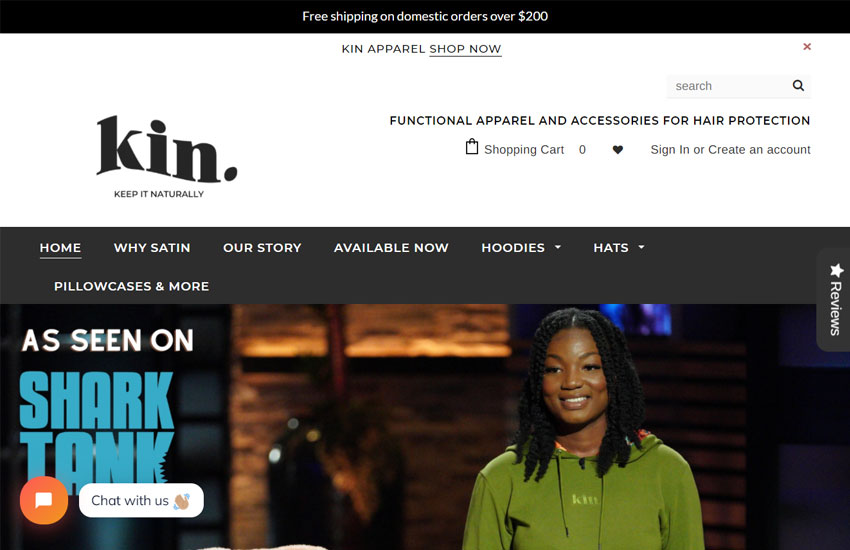
Philomina Kane, born in the Bronx but who grew up in Ghana, created a line of satin-lined hooded apparel to help combat frizzy, dry hair. Kin Apparel also includes sweatshirts for hair maintenance.
Before creating the company in April 2020, she had a well-established YouTube channel with nearly 200,000 subscribers and a strong social media following. This helped her reduce the cost of customer acquisition, but she still needed help supplying enough inventory to meet demand for her products.
Founder Philomina Kane leveraged:
- 200K+ YouTube subscribers
- Organic social marketing
- Authentic brand positioning
The entrepreneur chose satin because it is a much softer and silkier material than cotton. Your hair stays moisturized and protected because satin doesn’t absorb moisture and allows it to naturally retain moisture. This leads to a stronger and healthier hair. Philomina has a strong margin with around $60 in profits, and with total sales over the last year and a half of around $550,000, she grabbed the Sharks’ attention.
Negotiation Highlights
The Sharks responded positively to:
- Clear target demographic
- Strong gross margins (~$60 per hoodie)
- Built-in audience reducing CAC
Concerns focused on scaling production to meet demand.
Why Sharks Invested
- Audience-first growth strategy
- Expandable SKU line
- Retail & Amazon scalability
2026 Update: As of 2026, KIN Apparel continues operating as a growing apparel brand specializing in satin-lined hoodies designed to protect natural hair. The company has expanded its product line to include additional hair-protective clothing and accessories while maintaining strong direct-to-consumer sales through its ecommerce platform. The brand’s strong social media presence and community-driven marketing have helped it remain one of the most recognizable businesses from Season 13 Episode 1.
Where to Buy KIN Apparel
Interested in more Shark Tank kitchen products? Explore Lori Greiner’s kitchen investments to see other cooking and home deals she’s backed.
Lion Latch – Jewelry Storage Container
| ASKED FOR | VALUATION | GOT | SHARK | |
| $150,000 For 15% | $1 million | NO DEAL | NO SHARK |
Entrepreneurs: Lerin Lockwood
Product Overview
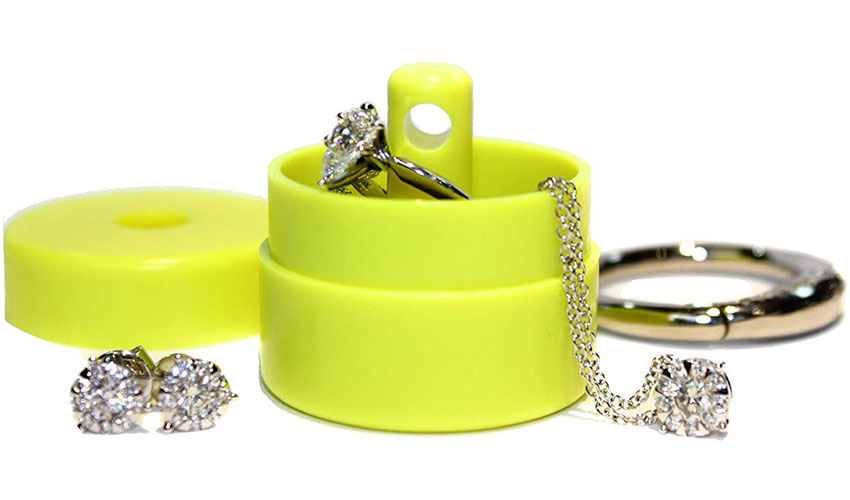
Lerin Lockwood is an art teacher who came up with the idea after playing softball and had her ring repaired and the stone replaced after a ball bent the setting of her engagement ring. And this is how Lion Latch was born – a jewelry storage container made of a two-piece hard plastic container. It’s great for storing necklaces, earrings, rings, or pendants, and the carabiner keeps them securely locked. You can easily tie it to your keychain or a bag.
The product gained traction through:
- Good Morning America exposure
- Amazon growth
- Boutique retail placements
Before its appearance on Shark Tank, the company has sold about 8,000 latches in different colors on their website or Amazon. The product has been featured on Good Morning America Deals and Steals and won the GOTEXAN’s 2020 People’s Choice Award, but couldn’t close a deal with the Sharks because they think the business was not big enough.
Negotiation Highlights
Sharks questioned:
- Market size
- Long-term defensibility
- Whether it was a single-SKU business
No deal was made.
The Lion Latch is unique because it does not come unscrewed, so you must physically remove the carabiner in order to pull the lid off.
2026 Update: As of 2026, Lion Latch remains active as a compact jewelry storage solution designed for athletes, travelers, and active lifestyles. The small container helps safely store rings, earrings, and other small valuables during sports or exercise. The brand continues selling through ecommerce marketplaces and online retail channels.
Where to Buy Lion Latch
Paskho Apparel
| ASKED FOR | VALUATION | GOT | SHARK | ||
| $500,000 For 2.5% | $20 million | NO DEAL | NO SHARK |
Entrepreneurs: Patrick Robinson
Product Overview
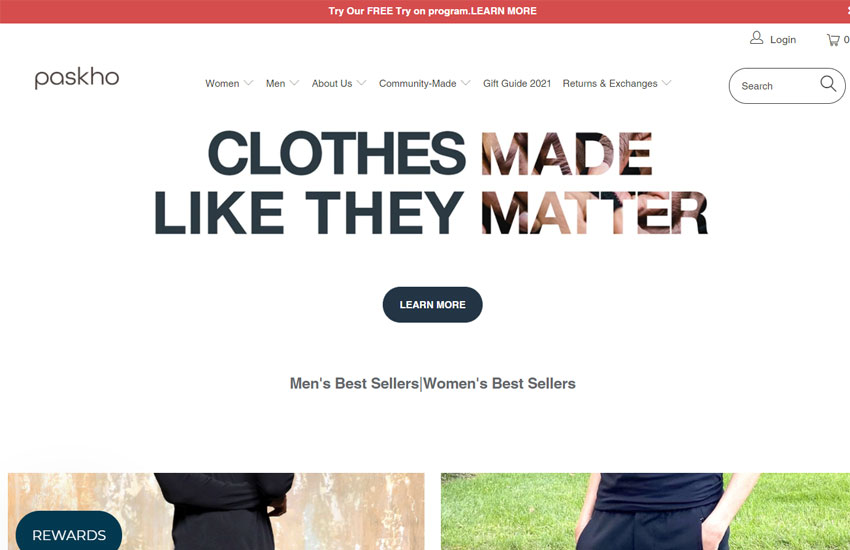
The last entrepreneur on Shark Tank Season 13 Episode 1 is Patrick Robinson with his company Paskho Apparel. Paskho is a clothing brand focused on the ultimate travel pants that emphasize comfort and relaxed elegance. The company is proud of bringing jobs back to communities and fighting the racial and social inequality in the United States. Founder Patrick Robinson brought high-level fashion credentials and brand prestige.
Robinson wanted to create a clothing line with a main focus on sustainability that would bring about change in much of the fashion industry. Only 14% of clothes and shoes can actually be reused or recycled.
After graduating from the Parsons School of Design, Robinson worked for numerous fashion brands in Milan and Paris, served as head designer for Gap, and, in 2015, launched a Kickstarter campaign. It ended up surpassing his goal of $50,000 and set the base for his company adventure. His idea is to design comfortable, simple, and beautiful clothing.
Negotiation Highlights
The $20M valuation immediately triggered pushback. Kevin O’Leary and Mark Cuban questioned scalability relative to revenue.
No deal secured.
2026 Update: As of 2026, Paskho Apparel continues operating as a sustainable fashion brand focused on ethically produced clothing inspired by global travel and craftsmanship. Although the company entered the Tank with a $20 million valuation and did not secure an investment, the brand has maintained a presence in the ethical fashion space through its online store and limited retail partnerships.
Where to Buy Paskho Apparel
More from Shark Tank
Recommended
Watch full episodes of shark tank online with Amazon Video
Did the Deal Close After Filming?
As of 2026, KIN Apparel’s deal is widely believed to have closed successfully.
The other companies did not secure post-show Shark investment.
Shark Tank agreements are subject to due diligence and occasionally fall through — but KIN Apparel demonstrated clear post-show growth.
Industry Breakdown of Episode 1
Industry Split:
- Food & Beverage: 1
- Apparel: 2
- Accessories: 1
Compared to other Season 13 episodes, Episode 1 featured:
- Higher-than-average valuation asks
- Lower-than-average deal conversion rate
- Strong emphasis on unit economics
🏆 Best Deal of the Episode
KIN Apparel stands out as the strongest long-term investment.
Why?
- Built-in audience
- Strong margins
- Expandable product ecosystem
- Authentic founder branding
The brand combined community leverage with scalable retail potential — a rare mix.
Shark Strategy Patterns in This S13E1 Episode
Kevin O’Leary focused on profit metrics and margin sustainability.
Lori Greiner gravitated toward retail-ready consumer goods.
Mark Cuban avoided capital-heavy operational models.
Daymond John evaluated brand authenticity in apparel.
The premiere demonstrated early-season caution toward overvalued lifestyle brands.
Why Shark Tank Season 13 Episode 1 Stands Out
Season premieres often set the tone — and Episode 1 of Season 13 delivered a clear message: profitability matters.
This episode featured:
- A keto bread company battling margin pressure
- A culturally resonant apparel brand that leveraged its audience for growth
- A niche accessory product with strong gifting appeal
- A sustainable fashion brand seeking a bold $20 million valuation
What made this episode memorable wasn’t just the pitches — it was the pushback. The Sharks challenged inflated valuations, dissected customer acquisition costs, and made it clear that scalable margins would define Season 13.
It was a premiere built on financial realism, not hype.
Final Thoughts on Shark Tank Season 13 Episode 1 S13E1
Shark Tank Season 13 Episode 1 reinforced a timeless investment lesson:
Passion must align with scalable margins.
Of the four companies, only one demonstrated both brand authenticity and operational scalability — and that difference determined who secured investment.
Don’t Miss Related Shark Tank Episodes:
• Shark Tank Season 13 Episode 2 Recap
• Shark Tank Season 13 Episode 3 Recap
• Full Shark Tank Season 13 Guide
Frequently Asked Questions About Shark Tank Season 13 Episode 1
What products appeared on Shark Tank Season 13 Episode 1?
Uprising Food (high-protein bread), KIN Apparel (satin-lined hoodies), Lion Latch (travel jewelry case), and Paskho Apparel (sustainable fashion brand) appeared on Shark Tank Season 13 Episode 1.
Did anyone get a deal?
Yes. KIN Apparel secured a $200,000 investment from Lori Greiner in exchange for equity. The other companies did not close on-air deals.
What was the highest valuation?
Paskho Apparel entered the Tank with a $20 million valuation, one of the highest of Season 13, asking $500,000 for 2.5% equity.
Is Uprising Food still in business in 2026?
Yes, Uprising Food continues operating primarily through online sales, focusing on low-carb, high-protein bread products.
Where can I buy Lion Latch?
Lion Latch products are available on Amazon and through the company’s official website, targeting athletes and travelers.
Which companies from Shark Tank Season 13 Episode 1 are still in business?
As of 2026, KIN Apparel remains active and continues to grow its brand presence. Other companies from the episode have had varying levels of traction, with some maintaining limited ecommerce operations.
Is KIN Apparel still in business in 2026?
Yes, KIN Apparel continues operating and expanding its inclusive hair-protection apparel line, with strong social media presence and direct-to-consumer sales.
Did all deals from Episode 1 close after filming?
While Shark Tank deals are subject to due diligence, KIN Apparel’s deal is widely believed to have closed successfully.
Which company from Episode 1 was the most successful?
KIN Apparel stands out as the strongest long-term brand from Shark Tank Season 13 Episode 1.
Did Paskho Apparel close a deal after Shark Tank?
No, Paskho Apparel did not secure a deal on air, largely due to concerns over valuation and scalability.
How much money was requested in Shark Tank Season 13 Episode 1?
A total of $1.35 million was requested across four companies during Episode 1.
Which company from Episode 1 gave up the most equity?
KIN Apparel gave up the largest confirmed equity stake after securing a $200,000 deal with Lori Greiner.
What was the biggest concern raised by the Sharks in Episode 1?
The biggest concerns included high valuations, customer acquisition costs, and scalability — particularly in the apparel and food categories.
