
Shark Tank Season 13 Episode 2 aired on October 15, 2021, and featured four diverse consumer brands spanning music, remote-work technology, shelf-stable meals, and sustainable fashion. Entrepreneurs from Chattanooga, Tennessee, kicked off the episode by pitching their personalized custom song service, aiming to turn meaningful moments into professionally produced music. From Sacramento, California, a pair of founders introduced a sleek work-from-home device designed to eliminate the awkward “Are you muted?” moments during video calls.
A driven sibling duo from Austin, Texas, stepped into the Tank with their shelf-stable meal service that requires no refrigeration, promising convenience without compromise. Meanwhile, siblings from Seabrook, New Hampshire, presented their sustainable apparel brand built around cleaning and restoring the world’s oceans. Guest Shark Peter Jones joined the panel, bringing his international investment expertise and adding another dynamic voice to the negotiations.
Season 13 Episode 2 balanced creative services, hardware innovation, food logistics, and sustainability-driven apparel — showcasing the broad industries Shark Tank continues to influence.
Looking for more from this season? Browse the complete Shark Tank Season 13 episode guide here. For a ranked breakdown of the strongest investments this season, explore the Best of Shark Tank Season 13 – Top Deals, Biggest Investments & Most Successful Companies.
About Shark Tank Season 13
Executive producer Mark Burnett and Sony Pictures TV are bringing another season of the business-themed reality show Shark Tank, where major investors, aka “sharks,” pitch business ideas from contestants. The show is based on the Japanese reality show “Dragon’s Den.”
Browse all episodes from Shark Tank Season 13 below.
Each recap includes the entrepreneurs, deals made, and 2026 business updates.
Shark Tank Season 13 Episodes
Disclosure: As an Amazon Associate, we earn from qualifying purchases. This helps support the site at no additional cost to you.
Shark Tank Season 13 Guest Sharks
Season 13 included several guest sharks alongside the main panel.
Notable guest sharks this season included:
- Emma Grede, CEO and co-founder of Good American and founding partner of Skims
- Kevin Hart (actor and comedian)
- Peter Jones (dragon on Dragons’ Den)
- Daniel Lubetzky, (founder and executive chairman of KIND Snacks )
- Nirav Tolia (co-founder of Nextdoor)
Peter Jones brought international perspective, contributing to the four-Shark deal on Songlorious.
You may also like
Shark Tank Season 8
I consider rejection a lucky charm.
Barbara Corcoran
We listed below every entrepreneur and business who has appeared on Shark Tank Season 13 Episode 2. Many scammers claim they’ve received big investments from the Sharks or they have been on the show. They were not actually on Shark Tank if you don’t see a business on this list. Some of the top places you can use to check are on Wikipedia and also ABC’s episode guide.
What Happened in Shark Tank Season 13 Episode 2?
This episode opened with creativity and closed with sustainability.
Businesses Featured on Shark Tank S13E2
Here is the complete list of companies that appeared on Shark Tank Season 13 Episode 2:
- Songlorious – impressed the Sharks with its personalized song business and secured a rare four-Shark deal.
- MuteMe – introduced a remote-work mute button device but failed to convince investors long term.
- Proper Good – pitched shelf-stable, ready-to-eat meals and secured a deal with Mark Cuban despite profitability concerns.
- Long Wharf – presented sustainable oyster-shell sweaters but faced valuation scrutiny and high CAC concerns.
The episode emphasized:
- Scalability of digital services
- High customer acquisition costs in DTC brands
- The importance of operational efficiency
Shark Tank S13E2 Products Summary Table
The table below provides a quick overview of every company that appeared on Shark Tank Season 13 Episode 2. It highlights each business’s industry, original funding request, whether a deal was secured in the Tank, the Sharks who invested, and the company’s operational status as of 2026.
This episode showcased a wide variety of business models — from a digital music service and remote-work hardware to shelf-stable food products and sustainability-driven apparel. As with many episodes of Season 13, the Sharks focused heavily on scalability, customer acquisition costs, and long-term market potential when evaluating each pitch.
| Company | Industry | Original Ask | Deal Made? | Shark(s) | Status (2026) |
|---|---|---|---|---|---|
| Songlorious | Custom Song Service | $400K for 10% | ✅ Yes | Mark Cuban, Kevin O’Leary, Daymond, Jones | Growing digital brand |
| MuteMe | Remote Work Hardware | $200K for 10% | ❌ No (Offer Rescinded) | — | Limited scale |
| Proper Good | Shelf-Stable Meals | $400K for 10% | ✅ Yes | Mark Cuban | National retail growth |
| Long Wharf | Sustainable Apparel | $375K for 15% | ❌ No | — | DTC niche brand |
Out of the four businesses featured in Shark Tank Season 13 Episode 2, two companies successfully secured investment deals.
Songlorious landed one of the most collaborative deals of the season, securing $500,000 for 40% equity from four Sharks: Mark Cuban, Kevin O’Leary, Daymond John, and guest Shark Peter Jones.
Meanwhile, Proper Good secured $400,000 for 20% equity from Mark Cuban, who saw strong potential in the fast-growing shelf-stable meal category despite the company’s early profitability challenges.
The remaining two businesses — MuteMe and Long Wharf Supply Co. — did not finalize deals on air. MuteMe initially received interest from the Sharks but ultimately saw the offer rescinded, while Long Wharf Supply Co. faced concerns about customer acquisition costs and valuation relative to revenue.
Overall, Episode 2 demonstrated the Sharks’ willingness to invest in scalable digital services and emerging consumer food brands, while remaining cautious about hardware products and early-stage apparel businesses with high marketing costs.
Episode Snapshot
- Season: 13
- Episode: 2
- Air Date: October 15, 2021
- Sharks: Mark Cuban, Lori Greiner, Kevin O’Leary, Barbara Corcoran, Daymond John
- Guest Shark: Peter Jones
- Total Pitches: 4
- Deals Made: 2
Episode Investment Totals & Financial Breakdown
Shark Tank Season 13 Episode 2 featured $1.375 million in capital requests, with $900,000 invested on air across two companies.
Financial Aggregation:
- Total Requested: $1,375,000
- Total Invested: $900,000
- Largest Deal: $500,000 (Songlorious – 4 Shark deal)
- No-Deal Count: 2
- Highest Equity Given: 40% (Songlorious)
- Average Equity Asked: 11.25%
- Highest Valuation Asked: $4 million (Songlorious & Proper Good – $400K for 10%)
- Lowest Valuation Asked: $1.33 million (Long Wharf – $375K for 15%)
Key Observations
Several clear investment patterns emerged during Shark Tank Season 13 Episode 2, revealing what the Sharks prioritize when evaluating early-stage businesses.
Digital scalability attracted the most interest.
The Sharks were particularly impressed by Songlorious, which demonstrated how a digital marketplace model can scale quickly with minimal overhead compared to physical products. Its personalized music service combined creativity with a scalable business structure, ultimately leading to a rare four-Shark deal.
Consumer packaged food remains attractive despite early losses.
Although Proper Good was not yet profitable at the time of filming, strong sales growth and the potential for retail expansion convinced Mark Cuban to invest. The Sharks frequently show interest in food brands with clear distribution opportunities in grocery and ecommerce channels.
Hardware products face higher scrutiny.
The remote-work accessory pitched by MuteMe struggled to secure long-term investor confidence. Sharks questioned whether the product could maintain relevance as remote-work trends evolved and whether competitors could easily replicate the concept.
Mission-driven apparel brands must prove marketing efficiency.
While the environmental story behind Long Wharf Supply Co. resonated with the Sharks, high customer acquisition costs and questions around scalability ultimately prevented a deal.
Overall, Episode 2 highlighted a recurring theme of Season 13: creative ideas can attract attention, but scalable economics ultimately determine investment outcomes.
Shark Tank Air Date: 10/15/21 – Season 13 – Episode 2
Songlorious – Send a Personalized Song
| ASKED FOR | GOT | SHARK |
| $400,000 For 10% | $500,000 For 40% | Mark Cuban, Daymond John, Kevin O’Leary and Peter Jones |
Entrepreneurs: Ellen Hodges And Omayya Atout
Product Overview
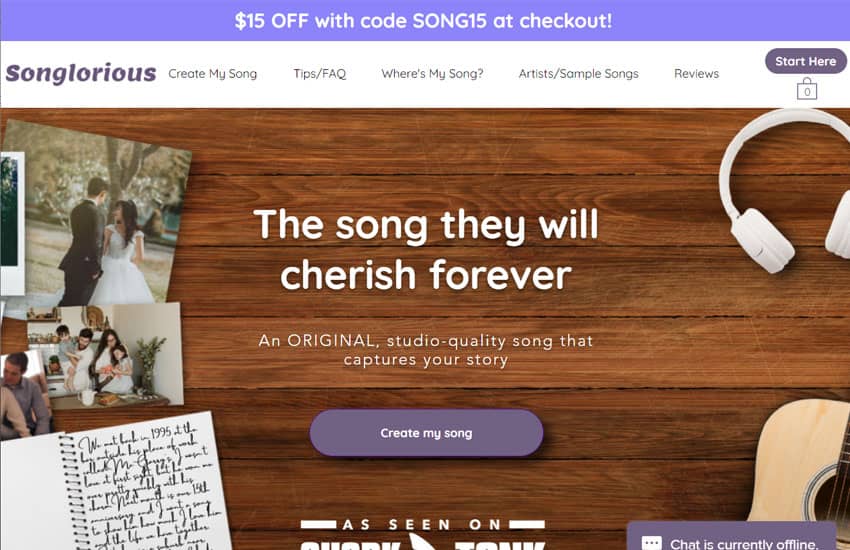
Songlorious is an online music company that creates custom songs. It is owned and operated by musician co-founders and husband and wife, Omayya Atout and Ellen Hodges based in Chattanooga, Tennessee. The company started in June 2020, after the duo quit their jobs and started Songlorious.
Users select:
- Genre
- Mood
- Occasion
- Length
Independent musicians compose and perform the custom piece while retaining rights to their work.
Pricing ranged from:
- $45 for short acoustic songs
- $200+ for full-length custom productions
In the initial weeks of the site launch, they received more than 100 orders, later expanded to include independent artists, and had approximately 120. The artists are allowed to maintain the rights to the songs they create through Songlorious.
They offer different prices, ranging from $45 for an acoustic 30-second song to $200+ for a full song. The process of song creation involves the user picking details such as genre, mood and length of the song. Based on the preferences of the user the musicians collaborate to create a personalized song.
Negotiation Highlights
The Sharks were impressed by:
- Strong early demand
- High margins
- Digital scalability
However, equity dilution was significant. The founders accepted a 40% stake in exchange for $500,000 from four Sharks.
2026 Update: Songlorious continues operating as a personalized music platform that allows customers to order custom songs for birthdays, anniversaries, and special occasions. The company has expanded its network of independent musicians and strengthened its online marketplace model. Its scalable digital service and viral social media appeal have helped it remain one of the more recognizable brands from this episode.
Where to Buy Songlorious
Interested in more Shark Tank kitchen products? Explore Mark Cuban’s largest food and restaurant investments.
MuteMe
| ASKED FOR | GOT | SHARK |
| $200,000 For 10% | Offer Rescinded | NO SHARK |
Entrepreneurs: Parm Dhoot And Tye Davis
Product Overview
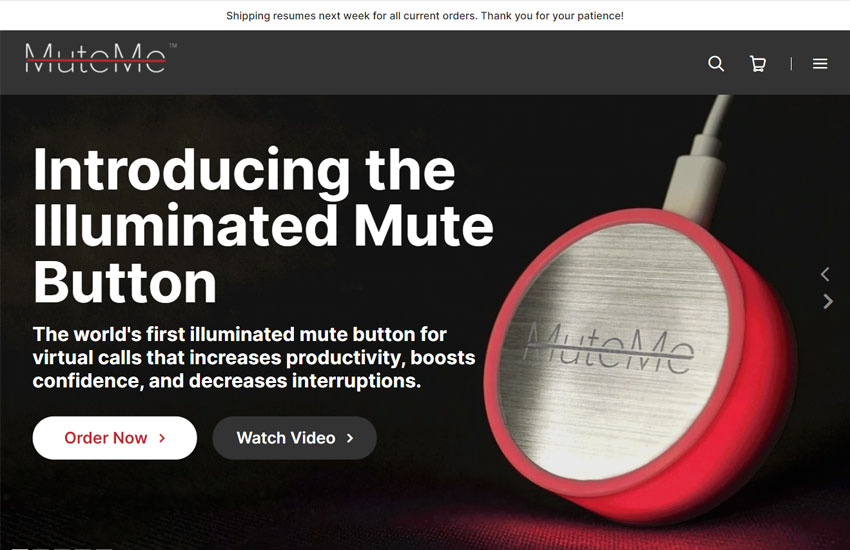
Parm Dhoot and Tye Davis, two entrepreneurs from Sacramento, California, presented their work-at-home product, MuteMe, to the Sharks. This is the “first illuminated button that stays in sync with your video conferencing,” which increases productivity by decreasing interruptions. The hardware provides visual mute confirmation to reduce interruptions during remote work calls.
MuteMe works and stays in sync with many video conferencing tools, including Webex, Skype, Teams, Zoom, and Google Meet. You can quickly mute and unmute yourself, and choose from four different effects and eight different colors. The concept is very simple: you plug it into your computer and mute your microphone when you touch it. It is very easy to use, and the visual confirmation of red lighting lets you know that you are muted.
MuteMe adds push-to-talk to any video call and by simple tap allows you to push-to-talk or push-to-mute. Unfortunately, the Sharks were not impressed with their idea and were not able to close a deal in Shark Tank.
Negotiation Highlights
The Sharks questioned:
- Market size
- Defensibility
- Long-term relevance post-pandemic
Although an offer was initially discussed, it was ultimately rescinded.
2026 Update: MuteMe experienced increased attention during the remote-work boom following the pandemic. The illuminated mute button device gained traction among professionals using Zoom, Teams, and other conferencing tools. However, long-term growth has been more limited as competition increased and remote-work hardware demand stabilized.
Where to Buy MuteMe

Proper Good
| ASKED FOR | GOT | SHARK |
| $400,000 For 10% | $400,000 For 20% | Mark Cuban |
Entrepreneurs: Christopher Jane and Jennifer Jane
Product Overview
Christopher Jaane and Jennifer Jaane, founders of the healthy ready-made m,eals company Proper Good. They impressed the Sharks in season 13, episode 2 of Shark Tank, with a net worth estimated at $950,000.
Proper Good uses clean, healthy ingredients in ready-to-eat meals that are low in sodium, no-added-sugar, and made with coconut milk and turmeric. Their soup is ready-to-eat right away or heated in 90 seconds in the microwave and eaten hot.
Proper Good offers many vegan options and an inexpensive subscription service for a box of 12, about $72, which makes each meal about $5.99. There is no need to refrigerate as the meals have an 8-month shelf life.
Negotiation Highlights
Although sales were strong:
- $556K in 2020
- $1M in first half of 2021
The founders admitted losing ~$80K per month due to high customer acquisition costs. Mark Cuban invested, likely seeing long-term retail expansion potential.
Although they have impressive sales numbers, starting in April 2020, they’ve made about $556,000 in sales, and in the first half of 2021, they’ve already done $1 million in sales. Christopher and Jennifer Jane reveal that they aren’t profitable yet and that they are losing about $80,000 a month. One of the main reasons is that the costs of acquiring customers are pretty high.
2026 Update: Proper Good has continued expanding its shelf-stable meal brand through ecommerce and retail partnerships. The company offers a range of ready-to-eat soups, oatmeal, and plant-based meals that require no refrigeration. With backing from Mark Cuban, the brand has focused on improving distribution and strengthening its position in the growing convenient healthy-meal category.
Where to Buy Proper Good
Long Wharf
| ASKED FOR | GOT | SHARK |
| $375,000 For 15% | Offer Rejected | NO SHARK |
Entrepreneurs: Lauren Lamagna and Mike Lamagna
Product Overview
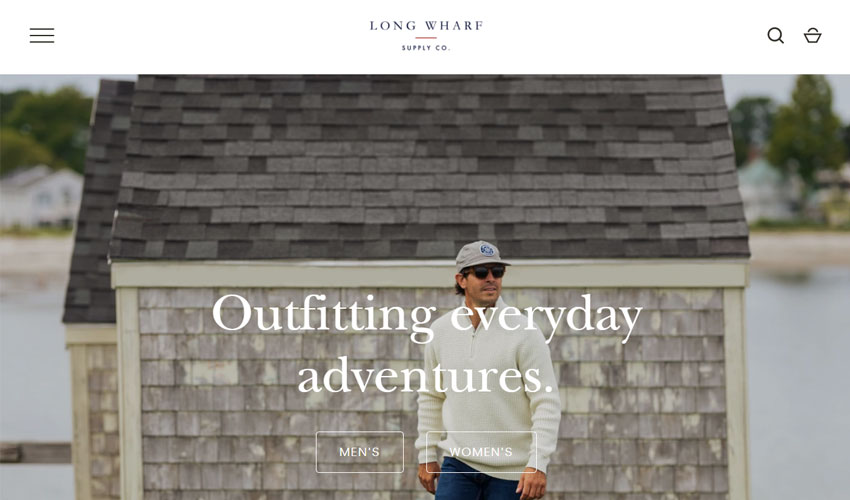
Lauren Lamagna and Mike Lamagna founded the clothing company Long Wharf focused on creating sustainable clothing from mixing recycled plastic with crushed Oyster shells. The siblings founded the Long Wharf company in 2016, but they only recently started selling sweaters. Although they sold almost $500,000 in sweaters, the price and the customer acquisition cost are quite high.
The company makes the sweaters for $22.50 to $33.50 and sells them for about $128 to $158. Long Wharf also supports general marine-life monitoring and preservation projects.
Millions of pounds of oyster shells are discarded and end up in landfills every year, turning toxic over time while contributing to global waste. Every sweater they sell directly reseeds coastal oyster reefs, and so far, they helped reseed over 70,000 oysters, which naturally filter 3.5 million gallons of seawater every day.
Negotiation Highlights
Sharks questioned:
- High customer acquisition costs
- Scalability
- Valuation relative to revenue
Despite strong mission appeal, no deal was secured.
2026 Update: Long Wharf Supply Co. remains active as a sustainability-focused apparel brand producing sweaters made from recycled materials and crushed oyster shells. While the company did not secure investment on the show, it continues selling directly to consumers online and promoting ocean restoration through its clothing initiatives.
Where to Buy Long Wharf
More from Shark Tank
Recommended
Watch full episodes of shark tank online with Amazon Video
Did the Deals Close After Filming?
As of 2026:
- Songlorious’ multi-Shark deal is believed to have closed.
- Proper Good’s deal with Mark Cuban moved forward, aiding retail expansion.
- MuteMe and Long Wharf did not secure Shark investment post-show.
Why Shark Tank Season 13 Episode 2 Stands Out
This episode is notable because it featured:
- A rare four-Shark investment in a digital music platform
- A pandemic-era remote work hardware pitch
- A shelf-stable meal service targeting grocery disruption
- A sustainability-driven apparel brand focused on ocean restoration
It showcased Shark Tank’s broad industry influence — from digital services to consumer packaged goods and mission-driven fashion.
Final Thoughts on Shark Tank Season 13 Episode 2 S13E2
Shark Tank Season 13 Episode 2 highlighted a core investment truth:
Scalability determines survival.
While creativity and mission-driven branding captured attention, the Sharks ultimately focused on business fundamentals — margins, customer acquisition costs, and long-term defensibility.
Songlorious proved that digital services with strong margins can scale quickly. Proper Good demonstrated that even unprofitable companies can attract investment if the growth trajectory is compelling. Meanwhile, MuteMe and Long Wharf revealed how hardware limitations and high acquisition costs can stall otherwise promising ideas.
In the end, Episode 2 reinforced what the Sharks consistently prioritize:
Growth potential must be backed by sustainable economics.
Don’t miss:
• Shark Tank Season 13 Episode 20
• Shark Tank Season 13 Episode 22
• Full Shark Tank Season 13 Guide
Frequently Asked Questions About Shark Tank Season 13 Episode 2
What products appeared on Shark Tank Season 13 Episode 2?
Shark Tank Season 13 Episode 2 featured Songlorious (personalized songs), Proper Good (shelf-stable soups), MuteMe (illuminated mute button device), and Long Wharf Supply Co. (sustainable sweaters).
Who got a deal in Episode 2?
Songlorious and Proper Good secured deals on air. MuteMe initially received an offer that was later rescinded, and Long Wharf Supply Co. no deal.
What was the largest equity stake given in S13E2?
The largest equity stake was 40%, given by Songlorious in exchange for a $500,000 investment from four Sharks.
Did MuteMe get a deal in S13E2?
No. Although MuteMe initially received an offer, it was rescinded before a final agreement was completed.
Did Songlorious close their Shark Tank deal?
Yes, Songlorious’ four-Shark deal is widely believed to have closed after filming. The company continued expanding its personalized music platform and grew its online presence post-show.
Why was MuteMe’s Shark Tank offer rescinded?
The Sharks ultimately backed out due to concerns about long-term market demand, defensibility, and whether the product would remain relevant beyond remote-work trends.
Is Proper Good profitable after Shark Tank?
At the time of filming, Proper Good was not profitable and was losing approximately $80,000 per month due to high customer acquisition costs. However, the deal with Mark Cuban helped the company expand retail distribution and improve operational efficiency in the years following the show.
Is Proper Good still in business after Shark Tank?
Yes, Proper Good remains active and expanded its retail footprint following its deal with Mark Cuban.
Was Proper Good profitable during filming?
At the time of filming, Proper Good was not profitable and reportedly losing significant monthly capital due to high customer acquisition costs. The Shark investment helped improve operational scaling.
Which companies from Shark Tank Season 13 Episode 2 are still in business in 2026?
Songlorious, Proper Good, and Long Wharf Supply Co. remain active brands as of recent updates. MuteMe’s long-term activity has been more limited compared to the others.
What was the largest deal in Shark Tank Season 13 Episode 2?
The largest deal was $500,000 for 40% equity in Songlorious, backed by four Sharks.
How much total money was invested in Shark Tank Season 13 Episode 2?
A total of $900k was invested across multiple companies during Episode 2, including a $500,000 four-Shark deal for Songlorious.
Why did Long Wharf Supply Co. get a deal?
The Sharks were impressed by its sustainable sourcing model, strong margins, and clear brand positioning in the premium apparel market.
Which deal involved the most Sharks in S13E2?
Songlorious secured a rare four-Shark deal, making it one of the most collaborative investments of Season 13.
Which company had the highest valuation in S13E2?
Long Wharf Supply Co. entered with one of the higher valuations in the episode, asking $375,000 for 10%, implying a $3.75 million valuation.
Was Episode 2 considered a strong deal episode?
Yes, Episode 2 featured multiple investments and one of the larger collaborative deals of the season, making it one of the stronger funding episodes early in Season 13.
Did any company walk away without an offer in Shark Tank S13E2?
MuteMe initially received an offer, but it was rescinded. The other companies secured on-air deals.
